
Taiwan’s Sovereign AI Software Goes Global: FedStore Application Marketplace Launches in Kaohsiung Central and Local Governments Join Forces to Support Taiwan’s AI Industry; AI Models from Four Major Medical Centers Listed on the Platform; Expansion into U.S. and Southeast Asian Markets
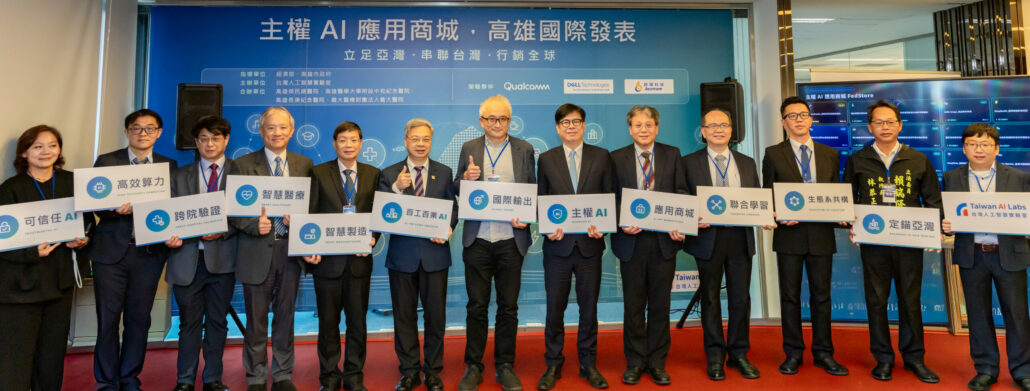
KAOHSIUNG, Taiwan — November 25, 2026
Taiwan AI Labs today held the Sovereign AI Application Marketplace: Kaohsiung International Launch at its R&D headquarters in the Asia New Bay Area, officially launching the FedStore application marketplace and showcasing the results of its Ministry of Economic Affairs (MOEA) A+ Enterprise Innovation R&D Program. Building on cross-hospital validation of intelligent healthcare solutions involving four major medical centers, Taiwan AI Labs has commercialized a collaborative learning model that enables institutions to work together without transferring their data outside their premises. The model is now being extended to industries including finance and small and medium-sized enterprises (SMEs), while Taiwanese AI software solutions are simultaneously expanding into the U.S. and Southeast Asian markets. The initiative marks Taiwan’s evolution in the global AI landscape—from a major hardware manufacturing hub to an exporter of AI software and applications.
Minister of Economic Affairs Kung Ming-hsin, Kaohsiung Mayor Chen Chi-mai, Taiwan AI Labs Founder Ethan Tu, representatives from Kaohsiung Veterans General Hospital, Kaohsiung Medical University Chung-Ho Memorial Hospital, Kaohsiung Chang Gung Memorial Hospital, and E-Da Hospital, as well as representatives from Qualcomm, Dell Technologies, and Synnex Technology International, attended the event. With support from central and local governments and collaboration among technology companies and healthcare institutions, Kaohsiung is emerging as a launchpad for Taiwan’s sovereign AI solutions to enter international markets.
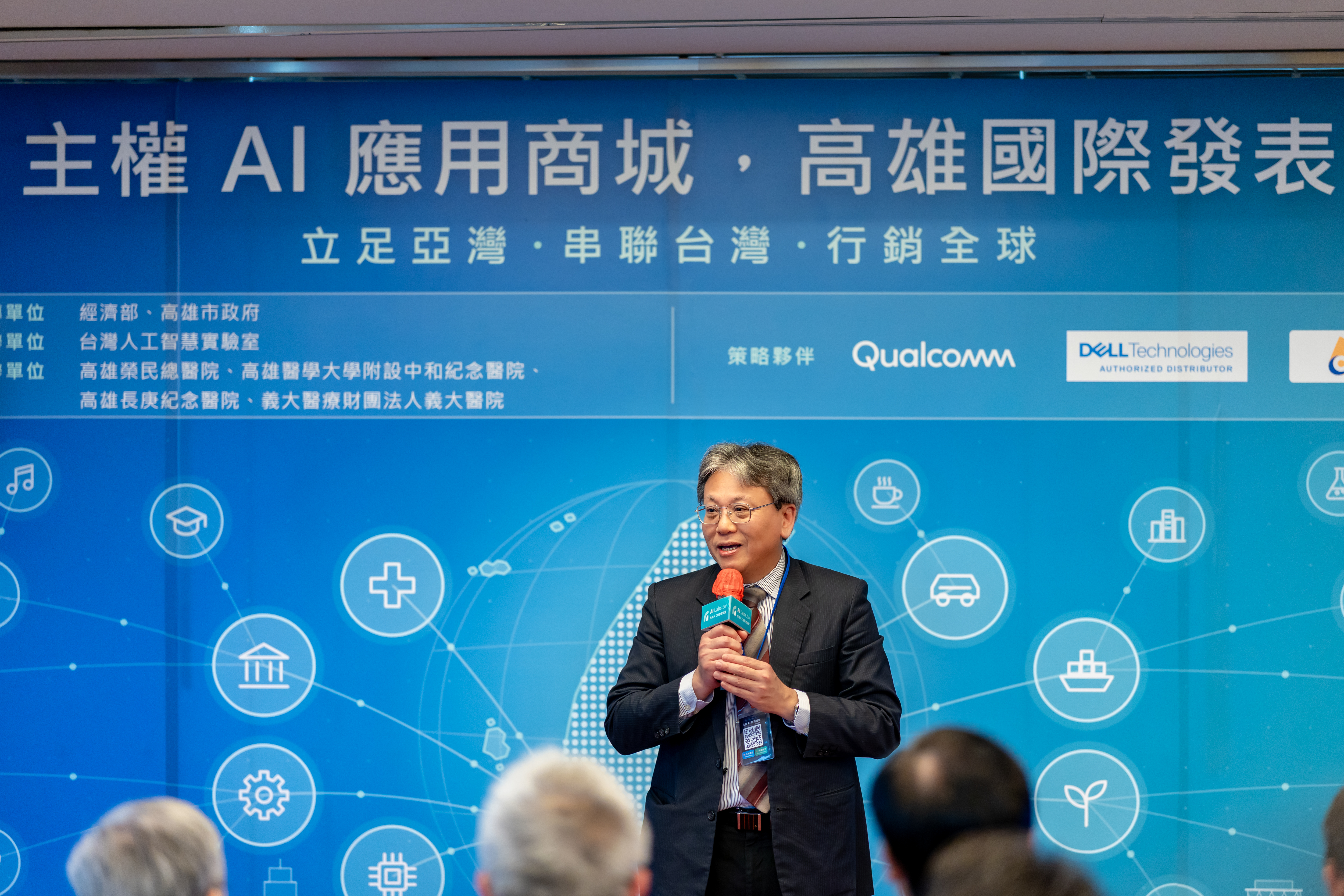
Kaohsiung Mayor Chen Chi-mai said, “Kaohsiung is actively transforming into a hub for smart technology and innovative industries, attracting international technology partners and R&D teams through the continued development of Asia New Bay Area 2.0. This initiative, combining the resources of Kaohsiung’s four major medical centers with the expertise of international companies such as Qualcomm and Dell, demonstrates Kaohsiung’s strengths in developing the AI industry. The city government will continue working with the central government to make Kaohsiung a key base for Taiwan’s AI industry to connect with the world.”
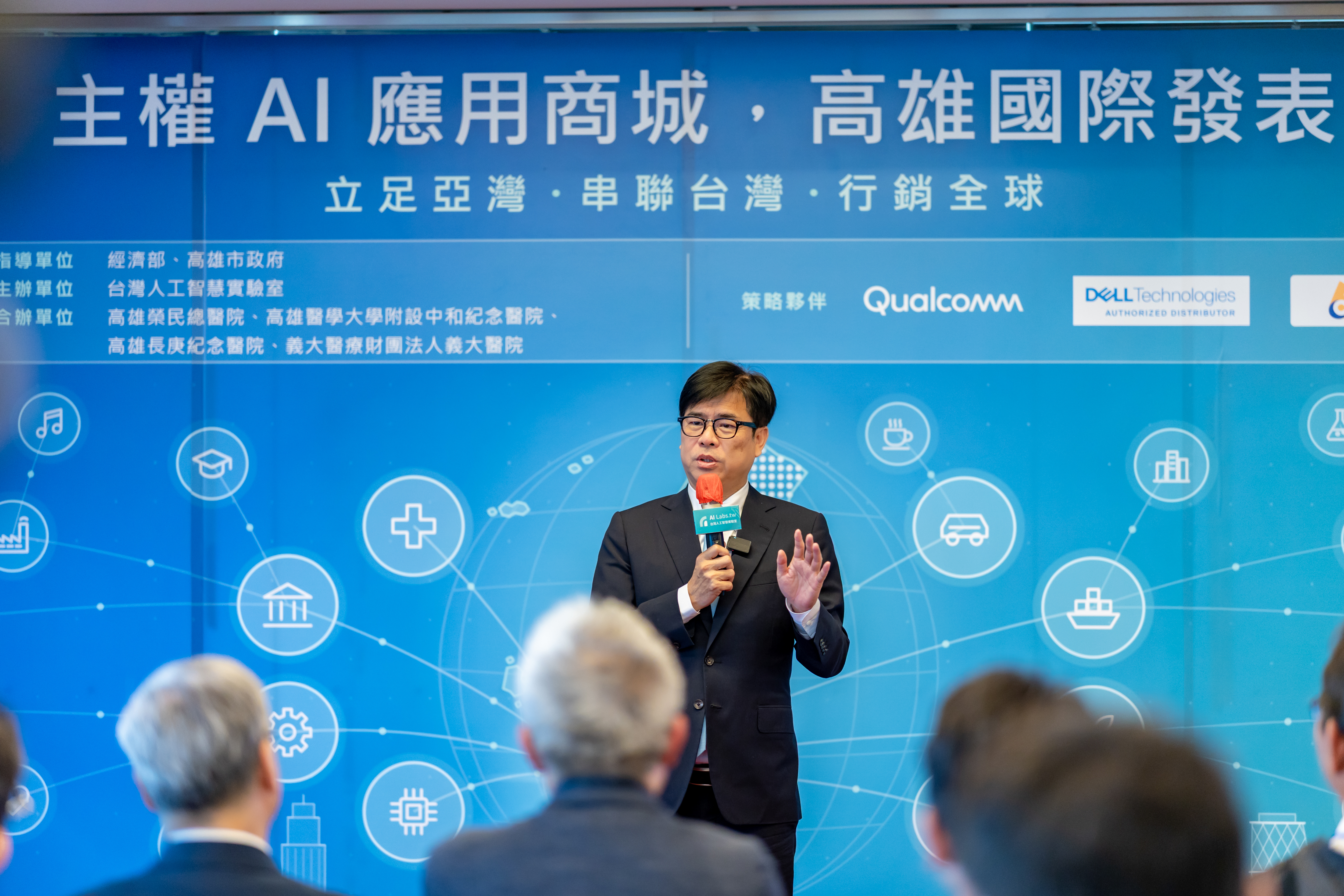
Taiwan AI Labs Founder Ethan Tu said, “We sincerely thank the Ministry of Economic Affairs, Kaohsiung City Government, and the four medical centers for their support and collaboration. Through federated learning, FedStore enables institutions to keep their data within their own environments while allowing models to collaborate across organizations, bringing research成果 into real-world applications that can be deployed and maintained. We will extend this model to finance and other industries while actively expanding into the U.S. and Southeast Asian markets, demonstrating the strength of Taiwan’s AI software to the world.”
Healthcare A+ Program Results: AI Models from Four Major Medical Centers Listed on FedStore
Supported by the MOEA’s A+ Enterprise Innovation R&D Program, Taiwan AI Labs collaborated with Kaohsiung Veterans General Hospital, Kaohsiung Medical University Chung-Ho Memorial Hospital, Kaohsiung Chang Gung Memorial Hospital, and E-Da Hospital to establish a cross-hospital platform for joint AI validation. Multiple AI models have completed cross-hospital validation, making this one of Taiwan’s largest collaborative validation initiatives for healthcare AI models. The relevant AI medical devices have also obtained certification from Taiwan’s Food and Drug Administration (TFDA).
With FedStore now online, hospitals can directly adopt models that have already completed cross-hospital validation, eliminating the need to independently develop and repeatedly validate models from scratch. This significantly shortens the timeline for bringing smart healthcare technologies from research into clinical practice, while establishing a sustainable and replicable business model.
From Healthcare to Industries Across the Board: An Open Platform Making AI Accessible
Building on the technologies and governance expertise gained through healthcare validation, the federated, open sovereign AI platform leverages standardized models and an open architecture to enable financial institutions, SMEs, research teams, and other organizations to participate in AI training and applications without sharing their raw data.
In the financial sector, a federated anti-fraud model developed through collaboration among financial institutions has been featured by Columbia University in the United States as a representative example of international collaboration in combating financial fraud. The technology also demonstrates potential applications in critical fields including public health, financial regulation, and national defense. Healthcare is only the starting point. The same “data stays local, models collaborate” approach will help industries and SMEs with sensitive data or limited resources for in-house AI development overcome barriers to AI adoption.
Taking Taiwan’s AI Software Global: A New Strategic Advantage Beyond Hardware
In the U.S. market, Taiwan AI Labs has partnered with U.S. company DS Federal. Its sovereign AI platform has been designated “Awardable” by the U.S. Department of Defense’s Tradewinds Solutions Marketplace, qualifying it to enter the U.S. defense procurement ecosystem. The platform has also been featured in an interview by ABC 7 News in Washington, D.C. In Southeast Asia, collaboration with Thai medical technology partner Med Health is underway, while cross-border validation and enhancement of brain tumor models are being pursued with medical institutions in the Philippines.
Taiwan AI Labs also announced collaborations with international technology partners Qualcomm and Dell Technologies, leveraging the AI ecosystem in Kaohsiung’s Asia New Bay Area to integrate software and hardware and accelerate overseas expansion. Qualcomm’s high-performance, low-power edge AI computing capabilities support local inference of medical AI models, reducing dependence on cloud connectivity. This enables sensitive medical data to remain within healthcare institutions while delivering real-time responsiveness, computing efficiency, and data privacy.
Taiwan has long played a critical role in the global AI supply chain through semiconductors and servers. By exporting trusted AI software solutions internationally, Taiwan is now establishing a new strategic advantage beyond hardware.
About Taiwan AI Labs
Taiwan AI Labs’ federated learning technologies are aligned with international frameworks for trustworthy AI, including the European Union’s Artificial Intelligence Act (EU AI Act), the General Data Protection Regulation (GDPR), and the U.S. National Institute of Standards and Technology’s (NIST) AI Risk Management Framework. Taiwan AI Labs also participates in international standards discussions through the Global Partnership on AI (GPAI), the International Organization for Standardization (ISO), and the British Standards Institution (BSI). It has established data governance and AI technology collaboration mechanisms with the United States, the United Kingdom, France, the Czech Republic, and other countries, and has been invited to participate in major AI forums organized by the Organisation for Economic Co-operation and Development (OECD), among other international organizations.
About the Taiwan AI Federated Learning Industry Alliance (TAIFA)
Founded on January 29, 2021, TAIFA was initiated by Ethan Tu and Kung Ming-hsin, then-chairman of Taiwan’s National Development Council, with support from then-Vice President Lai Ching-te and heads of various government agencies. The alliance promotes collaboration among industry, government, academia, and research institutions through AI while safeguarding privacy and data governance.
To date, TAIFA has facilitated more than 487 federated learning projects and developed over 171 AI models, bringing together more than 43 participating institutions and 227 AI teams. Its initiatives have reached 99.7% of Taiwan’s population and connected with more than 14 countries.
